All posts
Clinic Locations & Access
Getting to Treatment Through a Colorado Winter
Getting to Treatment Through a Colorado Winter
Colorado adds something to treatment that most states do not. From late October on, the drive you chose in September can become a different trip entirely.
It matters because treatment is a routine, not an appointment. A route that fails twice in January can quietly turn into a month where you stop going.
Below you will find what usually goes wrong, what to sort out before the first storm, and what to do on a day the roads win.
Why Winter Breaks Routines
It is rarely one dramatic storm. It is the accumulation of mornings that take twice as long.
Ice on the way out of the driveway, a pass that closes, a school delay that moves everything back an hour. Each one is manageable. Six weeks of them is what makes people fall out of a routine.
The stretch that catches people out
January and February are harder than December, and they get less attention. By then the season has stopped being novel and the days are still short.
What to Sort Out Before the First Storm
Ask now what happens on a day you cannot get there. Every clinic has some version of an answer, and knowing it in October is very different from finding out in a whiteout.
Ask whether another location would be an option if your usual route is closed. In a network across the state that is sometimes possible, and it is worth knowing which clinic is your backup.
Put the answers somewhere you will find them
A note in your phone with the clinic number and what you were told. On a bad morning you will not want to be searching for either.
Practical Things That Help
None of these are dramatic. Winter routines are kept by small margins.
Leave earlier than feels necessary
Fifteen minutes of margin turns a stressful drive into an ordinary one. It is the single most useful change most people make.
Keep the car ready in advance
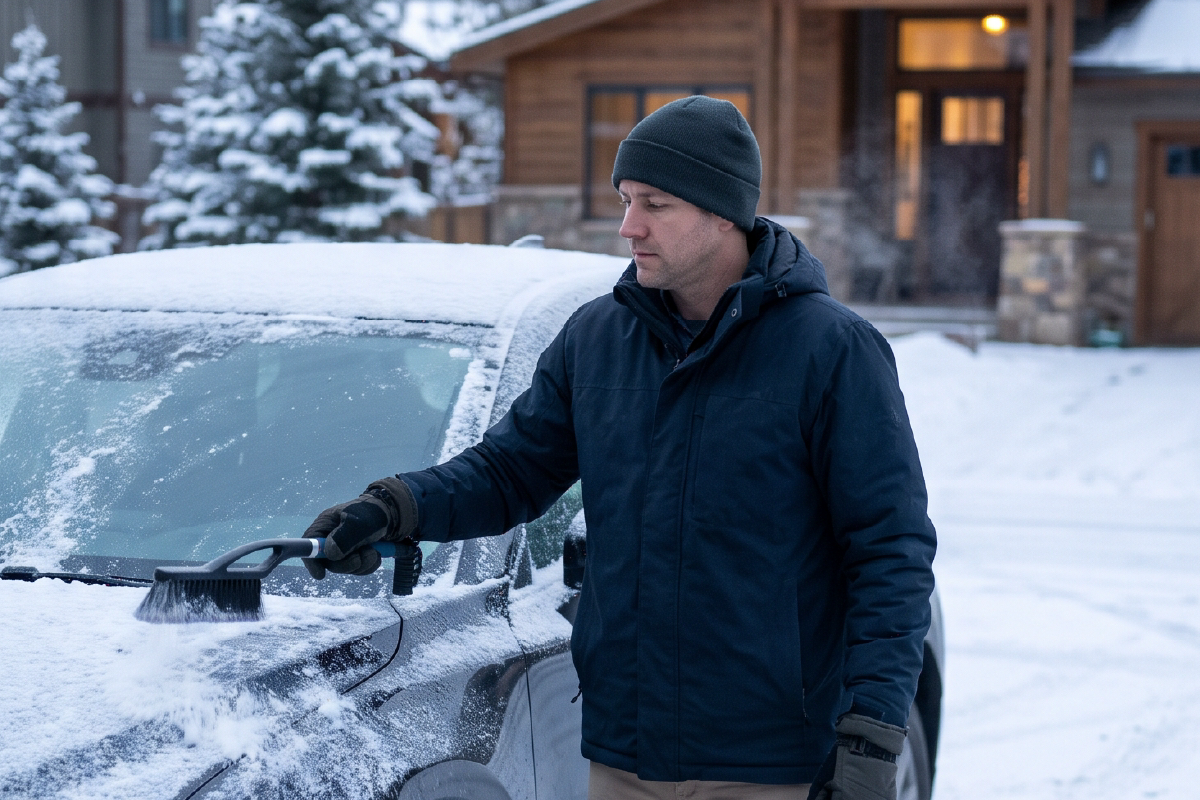
A scraper you can reach, a full tank, and gas kept above a quarter through the season. The mornings you need these are the mornings you have no time to fix them.
Have a plan for the second bad day
Anyone can handle one. The risk is the second or third, when missing starts to feel normal. Decide now who you will call if that happens.
What to Do on a Day You Cannot Get There
Call rather than disappear. That is the whole rule.
A clinic that hears from you can work with the situation. A clinic that does not hear from you has no way to help, and the gap grows on its own.
One missed day is not a decision
It only becomes one if it turns into two weeks. The call is what keeps that from happening.
If You Are the One Driving Someone Else
Some people get to treatment because a family member drives them, and winter makes that arrangement fragile.
It is worth having a second option agreed in advance, even an informal one. A ride that depends on one person and one working car tends to fail on exactly the mornings it matters most.
What Winter Does to Motivation
The roads are the visible problem. The less visible one is what six weeks of dark mornings does to how much you want to do anything at all.
That part is worth naming with your care team rather than treating as a character issue. It is seasonal, it is common, and it is easier to handle when somebody else knows about it.
The two problems compound
A morning that is hard to drive and a mood that is hard to move are much worse together than either one alone. Planning for the drive helps with both, because it removes one decision from a day when decisions are expensive.
If Your Route Is the Real Problem
Some routes are simply not winter routes, and that is worth admitting in October rather than in February.
If your drive involves a pass that closes, it may be worth asking whether a different location fits your winter better, even if it is not the closest one in summer.
What Nobody Warns You About in Late Winter
By February the novelty is gone on both sides. You are tired of the drive and the season is still going.
That is the stretch where people quietly reduce how often they go, usually without deciding to. It tends to happen one skipped morning at a time rather than as a choice anyone makes.
Say it out loud in January
If you can feel it coming, that is worth mentioning at a visit before it happens. A plan adjusted on purpose is very different from a routine that drifts.
Where to Ask
Denver Recovery Group has clinics across Colorado, including Breckenridge and Glenwood Springs in the mountains and Craig and Durango further out. Ask your clinic what winter usually looks like there, and what your options are if a morning goes wrong.
Frequently Asked Questions
What should I ask my clinic before winter?
What happens on a day you cannot get there, and whether another location is an option if your usual route closes. Write the answers down.
What if I miss a day because of the roads?
Call rather than disappear. A clinic that hears from you can work with it. One missed day only becomes a decision if it turns into two weeks.
Which months are hardest?
January and February tend to be harder than December. The season has stopped being novel and the days are still short.
Should I choose a clinic based on winter?
It can be worth it if your route involves a pass that closes. A location that is not the closest in summer may fit your winter better.
Sort It Out in October
Everything here is a short conversation now and a difficult one in February. Ask at your next visit what winter usually looks like at your clinic. Denver Recovery Group has clinics across Colorado, including Breckenridge and Glenwood Springs. Find yours at denverrecoverygroup.com.
Discover More
Explore more resources and services to support your recovery journey
Let's conquer
freedom together.

Get help today
You're not alone. Denver Recovery Group's evidence-based Medication-Assisted Treatment offers compassionate support to help you reclaim your life.
Here's how
we've got your back:
We're happy to work with ALL out-of-network providers and insurance plans.
Grant funding and a sliding-scale option are available.
Lean on our experienced team of counselors, case managers, and medical providers.
Our email:
Info@DenverRecoveryGroup.ComOur main clinic line:
303.953.2299Our 24-hour line:
720.616.0049

We see your strength.
Let us support your journey.
Patients
Contact
Main clinic line:
303.953.229924-hour line:
720.616.0049Email:
info@denverrecoverygroup.com
Copyright ©
Denver Recovery Group